

When it comes to gardening, nature is your best ally. And when we talk about zero waste, the idea is to work with this ally to create a sustainable and environmentally friendly growing system. With this in mind, we’ll discover together how to regrow fruits and vegetables at home from their scraps. A simple action that contributes to reducing waste while offering the satisfaction of watching your own food grow.
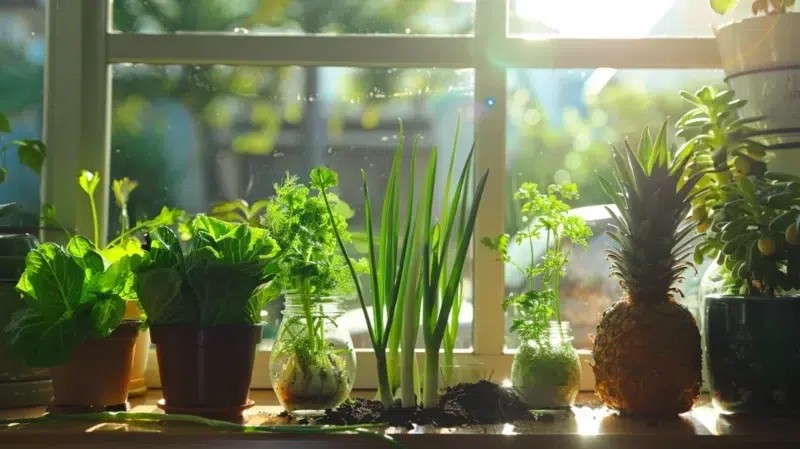
Vegetables to regrow at home
A zero-waste vegetable garden starts in your kitchen. Many vegetables can regenerate from their scraps. This is particularly true of Chinese cabbage, potatoes, and aromatic herbs.
For Chinese cabbage, it’s very simple: keep the heart of the vegetable, place it in a bowl of water, change the water every two days, and you will see new leaves appear.
As for the potato, it can reproduce vegetatively thanks to its eyes. Simply let a potato whose eyes have begun to sprout dry, then plant it in a pot of soil. With the help of the sun and water, shoots will emerge from the soil and give rise to new potatoes.
Aromatic herbs, on the other hand, can be propagated by cuttings. Simply cut a stem from your plant, place it in a glass of water, and let the roots develop. Once the roots have formed, you can replant your herb in its pot.
Fruits that can be regrown at home
While vegetables offer excellent opportunities for vegetative propagation, fruits are not to be outdone. Many of them can regrow from their seeds or pits.
Let’s take the example of an avocado. To regrow it, nothing could be simpler: remove the pit from the fruit, pierce it with toothpicks to keep it balanced in a glass of water, with the bottom submerged, and place your setup in a sunny spot. You will then see a shoot appear. Once it has reached about ten centimeters, you can replant the pit in a pot of soil.
Another fruit to consider is the pineapple. To regrow it, keep the top part of the fruit, including the leaves. Place this part in a bowl of water, changing the water regularly to prevent rot. Once roots appear, you can plant your pineapple in a pot of soil.
Transforming your garden into a zero-waste space
A zero-waste garden is a garden that generates no waste, or almost none. It’s a garden that recycles everything: kitchen scraps become compost, dead leaves are used to mulch plants, and fruit and vegetable remains are used to regrow new plants.
Such a garden requires some work and organization, but it significantly reduces household waste. It also offers the satisfaction of growing your own food, in harmony with nature.
Zero-waste gardening: a gesture within everyone’s reach
Growing zero-waste fruits and vegetables to regrow at home is a simple, economical, and ecological action. It’s a way to reduce waste while producing your own food.
And the best part? It doesn’t require any special gardening skills. Just follow the right advice, observe nature, and give it a little help now and then. So don’t hesitate any longer, embark on the zero-waste gardening adventure! You won’t regret it.

 English
  Spanish